" Entering into the orbit of Mercury has been, by far the biggest milestone since it was launched over six years. This achievement is the result of the tremendous work done by teams navigation, guidance and control and mission operations, that have guided trip of 7800 million miles ".
With these words Peter Bedini, member of the MESSENGER mission , summed up the joy of all participants and NASA together once confirmed that the operation had been successful and was now in permanent orbit around Mercury in closer to the Sun of all the planet, thus becoming the first spacecraft to make it. Gone are tense moments of waiting they had started an hour earlier, at the time that the active probe its six main engines
At the time, and for a period of 15 minutes, the speed began to drop, seeing reduced in 3100 km / hour, enough to allow the planet's gravity caught it ... a delicate operation, as in all interplanetary flights, was automatically and that technicians Earth could only sit and wait for MESSENGER whose communications were interrupted during this phase , refocus, after finishing all its antenna back to us to send all information about what happened .
And when that happened we could all breathe a sigh ... the probe was already in orbit around Mercury , ignition engines without any error had occurred and all systems were in perfect condition. The long journey was over.
The beginning of scientific work still must wait until April 4, once completed all necessary inspections, both the instruments of observation and internal systems of the ship, with the aim of ensuring that all smooth and responds well to the harsh environment in which you will live. And is that though the journey to finally come to an end, just the adventure has just begun.
The first hours of MESSENGER and Mercury satellite.
Mercury is currently visible at dusk, near Jupiter and somewhat above the ... from there, in that small point of light, the MESSENGER greets us.
is now closed XVI Poster festival Viña Rock . The two latest additions have been those of Soziedad Alkoholiker who never miss a Viña Rock and the legendary heavy rock band of Hell's Angels . We recall that the three-day ticket costs € 70 in advance and € 85 box office. For retail outlets www.vino-rock.com visit .
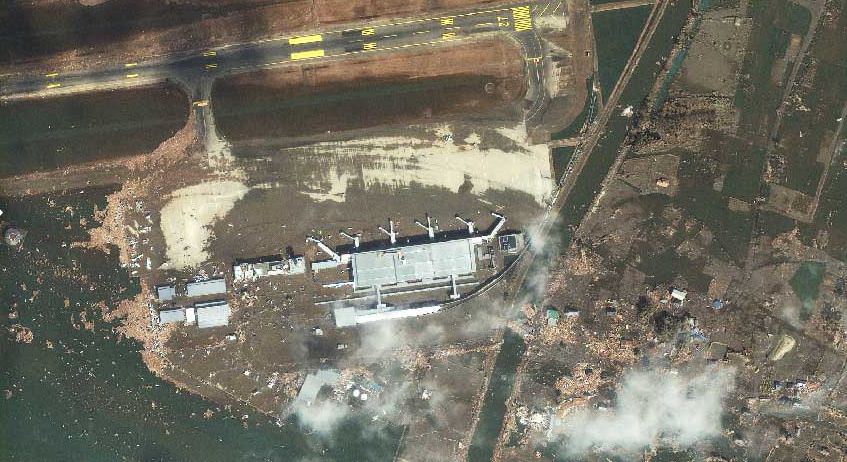
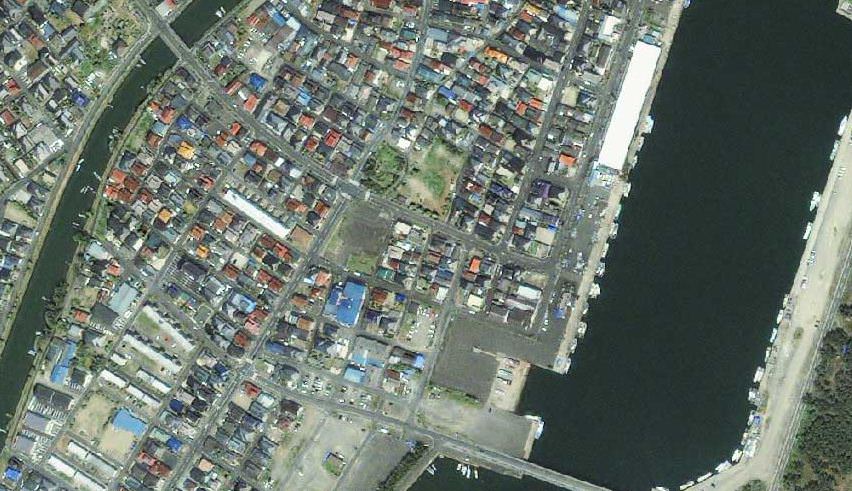
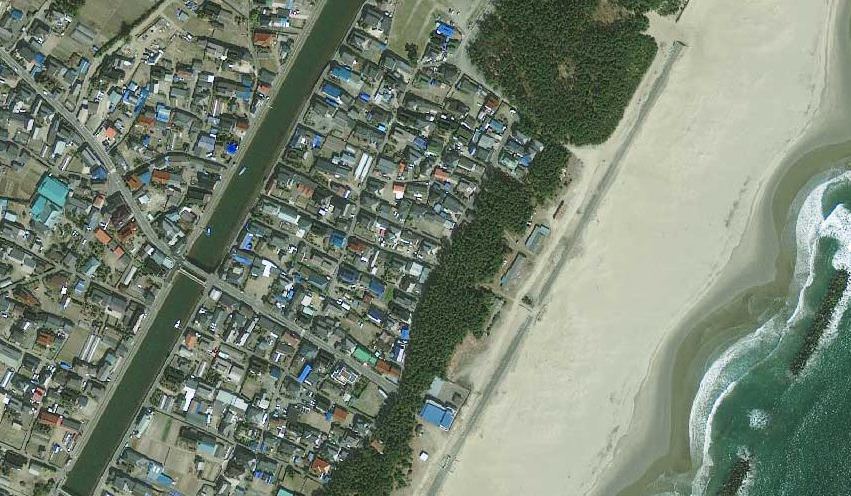
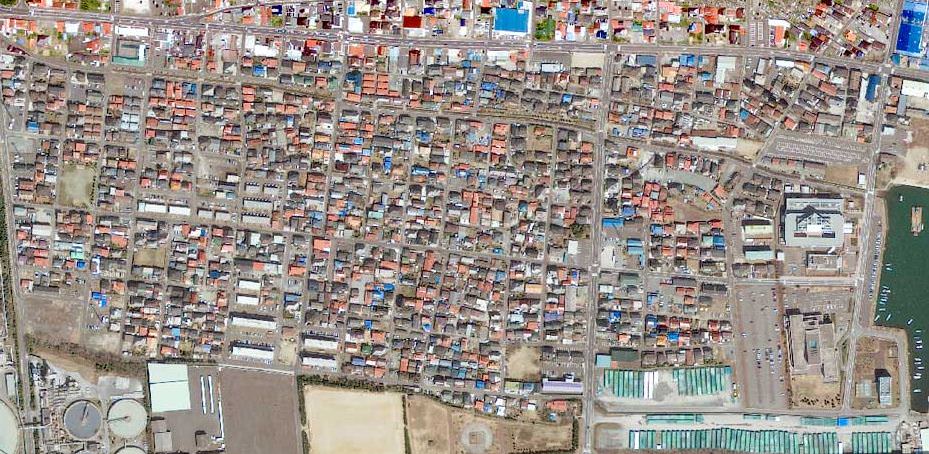
Dozens of satellites around Earth , we provide continuous wit IMAGES of our planet taken from a distance ... a flow of visual information could not be excluded from the events that happened in Japan , where a massive earthquake, followed by an equally devastating Tsunami, hit the country, especially the north.
images and videos taken from the same scene, which we have seen in the media and the network, are really shocking but lack the global prespective we offer photographs taken from space, less detailed but, instead, to give a better idea of \u200b\u200bthe magnitude of this natural disaster.
And an example is the picture above, taken by satellite Formosat and comprising a Iwanuma in Miyagi Prefecture ... the wave in 4 miles inland, leaving behind whether a dark mark that can be seen here clearly. Like little chance of survival than had those who were, at that time, near the coast.
so let the images speak for themselves.
GeoEye took this picture of Shinchi, Fukushima Prefecture, where we can see the remains of one of the four trains that were hit by the Tsunami.
The sadly Fukushima nuclear power plant, photographed shortly after the explosions that have been going at it ...
Natori, a city of some 70,000 inhabitants near Sendai, with fields flooded and debris burning.
Minamisanrikucho submerged lands, a small town near Sendai.
Another image that records up to where the waters came before retiring in Minamisoma .. here the wave moved over two miles.
The before and after Tsunami:
Sendai Airport.
Ruin and desolation in Iwaki. ..
... as well as in other parts of the north coast.
The strength of a large-scale Tsunami is devastating and almost unstoppable, destroying everything is on the way ...
... and for many areas of northern life should start virtually from scratch.
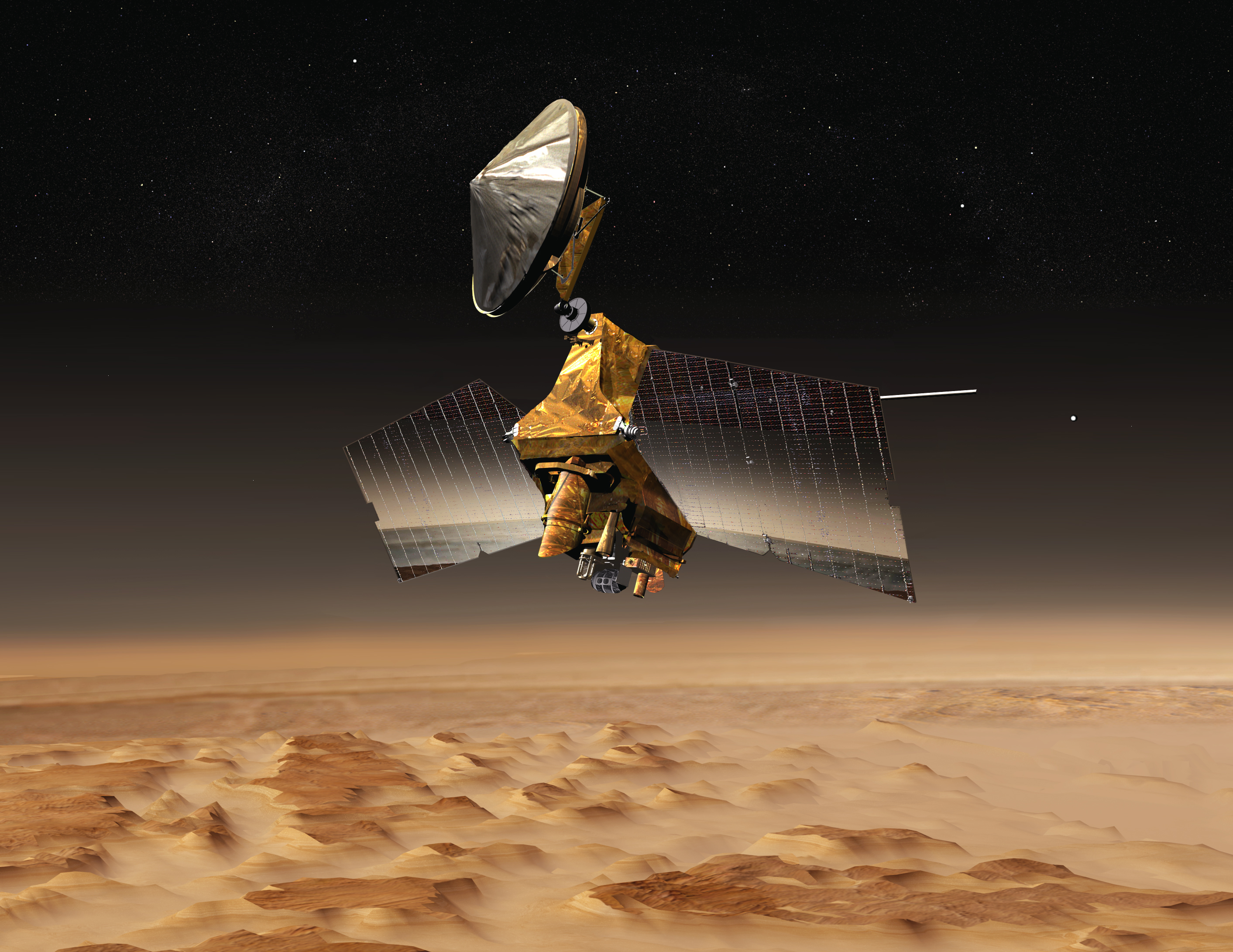
was met five years of the arrival of the Mars Reconnaissance Orbiter .
The March 10, 2006, and after seven months of travel, the six key drivers were put in place for nearly 27 minutes, just enough to speed be reduced enough to allow gravity to Mars permanently caught him ... were moments of great tension, because it was a delicate maneuver, and reached its peak when I pass behind the planet and communications were cut momentarily, but eventually all those involved were able to vent their joy: The Mars Reconnaissance Orbiter was already in orbit around Mars .
been 5 years since that day, half a decade that forever changed our understanding of the red planet, offering the possibility to see with a clarity never before dreamed of thanks to the HiRISE camera , The strongest ever sent to another planet ... at this time the MRO has sent almost 131 Terabaits of information (more than any other interplanetary missions together) to Earth, including 70,000 photographs of high quality, which gives an idea of \u200b\u200bthe tremendous work being done and what is irreplaceable in the current exploration of Mars.
How could it be otherwise so much data has respresented a breakthrough in our understanding of the red planet, especially to light that could be the evolution of Mars since its formation and the various "eras" which seems to have lived since past with clear signs of having been wet and warm up to this as cold and dry as we see today.
Thus, the observation of the oldest parts of the world, those showing a densely cratered terrain, allow to locate land that had been heavily altered by water, wetlands, areas that might have been suitable for life in pirmeros those times. It was also discovered clear evidence of extreme weather cycles, where water would be circulated in the form of gas, from the poles to low latitudes, which would have enabled device in the form of ice or snow, resulting in extensive layers of ice and rocks possibly necsitaron tens or hundreds of millions of years to form what looks like the ice ages that have occurred in Earth and in this case seems related to changes in the tilt of its axis of rotation.
also the MRO also taught us that the current Mars, although a dry and frozen world, not devoid of dynamism ... cycle CO2 , freezing and sublimating the rhythm of the stations, and the possible presence of liquid water occasionally, continues to change some parts of the planet, like avalanches and large dust storms. Frozen in reality, but not frozen in time.
not end here the achievements of the tube ... well, has raised a map of the mineral composition of 3 / 4 of the Martian surface (Compact Reconnaissance Spectrometer ), monitored the atmosphere (Mars Climate Sounder) and sounded the subsurface radar ( Shallow Radar), in an exploration of Mars without predecedentes.
" Each Martian year is unique, and additional coverage gives us a better opportunity to understand the nature of the changes in its atmosphere and surface. We've already learned that Mars is a planet more diverse and dynamic than we knew five years ago. continue to see new things, "said Rich Zurek, the scientific team of the Mars Reconnaissance Orbiter.
And, in the transitory golden age that we live in the exploration of Mars , many vehicles are on the planet working simultaniamente red, also had its role in supporting other missions ... well, followed the landing of the Phoenix Mars (in fact I get to photograph in full decline, in a historical image), monitored dust storms that could represent a threat to them as Spirit and Opportunity , and perform liaison functions between them and Earth. In view of the future is to examine potential sites suitable to be chosen for future rover landing Curiosity.
Five wonderful years for the exploration of Mars , and likely are far from over, as Phil explains Varghese, director of the project: "The is born with excellent health. After five years on Mars continues to have the ability to address scientific observations, monitor the Martian environment and liaise communications. " And so be it.
Some pictures are worth a thousand words ... a selection of images taken earlier this year.
Recconaissance Mars Orbiter, Mars exploration by air, land and subsoil .
A photograph for the story: The Phoenix Mars in full decline, with its parachute deployed, as seen through the HiRISE camera of MRO.
August 12, 2005, the MRO begins his adventure with the aim to revolutionize our understanding of Mars. Six years later, that goal a reality.
 MESSENGER is already in orbit around the planet.
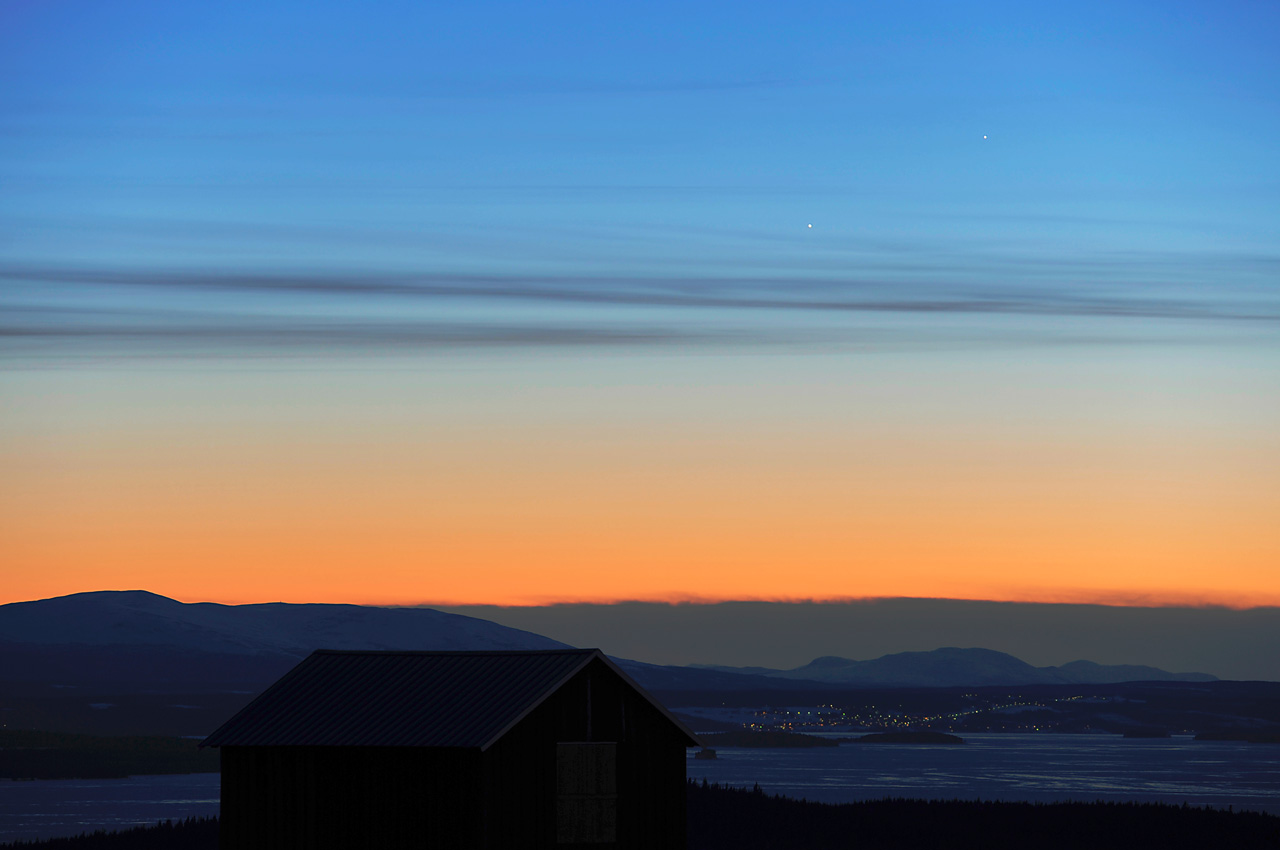 Mercury is currently visible at dusk, near Jupiter and somewhat above the ... from there, in that small point of light, the MESSENGER greets us.